
Apple Pie Kombucha Recipe (Apple Cinnamon Second Ferment)
Apple Pie Kombucha brings fresh apple juice, cinnamon, cloves and allspice to a batch of homemade kombucha. It’s a fall flavor for the second fermentation—the bottling stage when you add flavor to finished, unflavored kombucha.
My fall favorite was inspired by Jill of First Comes Health and her book Fermented, which opened my eyes to more flavoring options for home-brewed kombucha. If you like a tangy drink with warm spices, this is a good place to start.
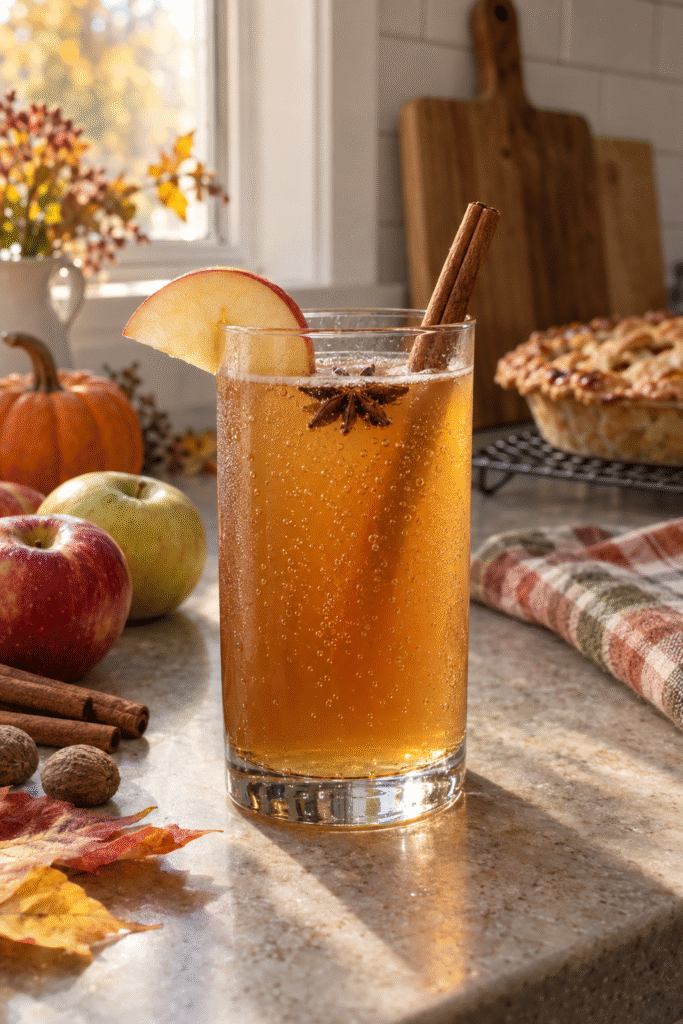
What does apple pie kombucha taste like?
This is apple-and-spice kombucha, not a creamy dessert drink. Fresh apple juice adds fruit flavor, while whole cloves, allspice berries and a cinnamon stick give it that familiar apple-pie aroma. How sweet or tart it tastes depends on your apples and the kombucha you start with.
Ingredients for apple cinnamon kombucha
- Finished first-fermentation kombucha: use an unflavored batch. If you’re starting from scratch, follow my first-fermentation kombucha recipe before bottling.
- Two Granny Smith apples: or another tart apple, juiced. Apples vary in size and juice yield; the bottle’s capacity determines how much kombucha you can add afterward.
- Two whole cloves, two allspice berries and half a cinnamon stick: use the whole spices called for in the card, rather than substituting the same quantities of ground spice.
- One tablespoon sugar: the original method uses coconut sugar. Keep the measured addition rather than adding extra sugar in pursuit of fizz.
Bottles and equipment
Have a juicer, a funnel, a small strainer and a clean 1-liter swing-top fermentation bottle ready. Select a bottle specifically rated by its manufacturer for carbonated beverages; the swing-top closure alone doesn’t establish that it can hold pressure.
This is an affiliate link; I may earn a commission from qualifying purchases. Keep another suitable bottle available if your apple juice and kombucha won’t fit with the required headspace. Never force a batch into a bottle filled to the brim.
How to make apple pie kombucha
- Juice the apples and add the juice to your clean bottle.
- Add the whole spices and measured sugar.
- Add finished kombucha, leaving the headspace specified by the bottle manufacturer. Mix gently before pressure develops.
- Monitor the second fermentation daily. Warmth, sugar and the activity of the kombucha all affect how quickly pressure develops.
- Refrigerate when ready, chill thoroughly and open slowly over a sink. Strain out the spices and serve cold.
New to bottling? Read my second-fermentation guide first. Use the recipe card for the ingredient amounts and detailed method.
Ingredients
- Kombucha (single ferment)
- 2 Granny Smith Apples or other Tart Apple
- 2 Whole Cloves
- 2 Allspice Berries
- 1/2 Cinnamon Stick
- 1 tablespoon Sugar
- 1 1-liter swing-top bottle rated for carbonated beverages

Instructions
- Using a JUICER (I recommend this juicer), juice your apples and pour your fresh apple juice into your 1 liter kombucha bottle
- Add your cloves, allspice berries, 1/2 a cinnamon stick and 1 Tablespoon of Coconut Sugar to your bottle
- Add finished kombucha, leaving the bottle manufacturer’s recommended headspace. Apple juice yield varies; use another pressure-rated bottle for excess mixture rather than overfilling.
- Seal and gently mix to dissolve the sugar before pressure develops. Do not shake a carbonated bottle.
- Monitor daily during second fermentation and cautiously release pressure. The time varies with temperature, juice and the base kombucha; refrigerate when ready rather than leaving sealed bottles unattended.
- Move bottles to refrigeration for storage.
- Chill thoroughly, then open slowly over a sink, away from your face, without shaking.
- Strain kombucha through a small strainer in order to remove any clumps of spice. Serve cold.
- Enjoy!
Tips for flavor and carbonation
Choose apples you enjoy, wash them before juicing and use clean equipment. If the base kombucha is already extremely tart, the apple flavor won’t turn it into a sugary apple drink. Taste the finished base before choosing it for this recipe; don’t taste a batch showing signs of spoilage.
Some spice sediment is expected. Strain after chilling rather than shaking a pressurized bottle to redistribute it. If you want a cinnamon-stick garnish, add it to the serving glass after opening.
If the bottle stays flat, check the seal and temperature before adding more sugar or leaving it sealed longer. My kombucha carbonation troubleshooting guide walks through those checks.
Storage and opening
Keep finished apple kombucha refrigerated. Cold slows fermentation but doesn’t eliminate pressure buildup. Check bottles regularly and open cautiously, away from your face. This recipe is not a shelf-stable preservation method.
Apple pie kombucha FAQs
Can I use apple juice instead of juicing apples?
The original recipe uses two freshly juiced apples, whose juice yield varies. Bottled apple juice would be a substitution; I haven’t established an exact replacement quantity for this version. Don’t guess a full bottle’s worth or add juice without allowing space for kombucha and headspace.
Can I use ground cinnamon?
The card uses a cinnamon stick and whole spices. Ground spices disperse through the drink, can clump and are harder to strain out. They aren’t a direct volume-for-volume swap.
Does apple kombucha contain alcohol?
It can. Both fermentation stages can affect the final alcohol content, and a homemade batch shouldn’t be assumed to be alcohol-free. See CSU Extension’s kombucha guide for brewing precautions.
What other fall kombucha flavor should I try?
My Pumpkin Pie Kombucha uses pumpkin, ginger and pumpkin pie spice. For a different way to use a finished flavored batch, try kombucha gummy bears.
More fermented foods for everyday meals
Bringing fermented foods into everyday cooking is why I wrote Fermented Foods at Every Meal. If you’d like more ideas beyond kombucha, my cookbook page has the details.
For another homemade fermented drink, try pineapple tepache. For a tangy side dish, explore fermented ginger orange carrots.



Does this contain alcohol since it is a second ferment?
With all fermented foods/drinks there is a possibility of a fraction of a percent of alcohol depending on the length of fermentation. The 2nd ferment is not the determining factor. The idea that Kombucha is an “alcoholic” beverage is a fallacy